Ein Album, das Grenzen abschafft: Das Debüt des in Indien aufgewachsenen Perkussionisten ist mehr als nur ein überragendes Stück Kollektivimprovisation.
Jazz mag zwar „America’s original art form“ sein, ist aber weit davon entfernt, eine rein amerikanische Angelegenheit zu sein. Von seinen Anfängen als Mix aus afrikanischen Rhythmen und europäischen Liedstrukturen bis zu Ethiojazz, Afrobeat und Latin gehören traditionelle Elemente anderer Kulturen zur DNA des Jazz. Da war es nur eine Frage der Zeit, bis jemand Kollektivimprovisation und indischen Folk zusammen bringt. Day to Day, das Debüt des Perkussionisten Sarathy Korwar, füllt mit Leichtigkeit eine dieser Lücken, die man erst im Nachhinein als solche wahrnimmt.
Mithilfe der Steve Reid Foundation für „musicians in crisis“ und „emerging talents“ hat der in den Staaten geborene und in Indien aufgewachsene Korwar in Gujarat Aufnahmen der Percussiongruppe Sidi Troupe of Ratanpur gemacht. Die Sidi Gemeinschaft, so verrät es die Pressemitteilung, besteht aus Auswanderern, die bereits im 7. Jahrhundert von Ostafrika nach Indien zogen. Dementsprechend gemischt ist auch der kulturelle Hintergrund, den Day to Day mit jenen polyrhythmischen Aufnahmen, dem Gesang von Salim Gulammohommad und der mal improvisierten, mal geplanten Musik widerspiegelt. Für letztere sorgen neben Korwar an Drums und Tabla unter anderem Shabaka Hutchings von den Sons of Kemet und Cara Stacey, die mit Umrubhe und Uhadi zwei afrikanische Bogeninstrumente spielt.
Vom ersten Song „Bhajan“ an entfaltet sich Day to Day in all seinem Facettenreichtum: Bogen, ein indisches Mantra – „bhajan“ bedeutet „Hymne“ auf Hindi – und das freie Spiel von Bläsern und Schlagzeug. Wie ein goldener Faden in einem indischen Teppich zieht sich die elektronische Produktion, die Korwar über die Foundation von Four Tet und Gilles Peterson erlernt hat, durch „Bhajan“ und das komplette Album. Der Anfang von Day to Day erinnert in der Art, wie er einer Kamerafahrt gleich eine Landschaft vor dem Auge des Hörers eröffnet, an Sketches of Spain oder Orphaned Lands Mabool.
Die Stücke sind für sich genommen großartig: „Bismillah“ und „Mawra (Transcendence)“ belegen wieder einmal, weshalb Jazz die sozialste aller Spielformen ist; „Dreaming“, „Eyes Closed“ und „Lost Parade“ sind Ambientkompositionen, bei denen Korwar die Klänge der traditionellen Instrumente mit Geräuschen arrangiert, sodass die Klangwelt dreidimensional erscheint (für einen zeitgenössischeren Vergleich: „Mars“ von Sinkane); „Hail“ eröffnet die zweite Seite mit einer stark dramatischen Vocalperformance von Jaideep Vaidya, die darüber hinaus noch elektronisch verzerrt wird; „Infinite Leave to Remain“ wird besonders denen gefallen, die den Jazz über poppig-rhythmische Alben von the Bad Plus, GoGo Penguin oder Avishai Cohen entdeckt haben.
Aber du meine Güte, die Gesamtkomposition dieses Albums! Ungeachtet des geografischen Kontextes Indien/Ostafrika schafft Sarathy Korwar Grenzen ab – geografische, gattungsspezifische, solche zwischen jazziger Improvisation, verzaubernder Folkmusik und elektronischer Verzierung. Zwischen Unterhaltung und Kunst. Was die Grenzenlosigkeit dieser Musik betrifft, steht Day to Day Seite an Seite mit Darksides Psychic,Colin Stetsons New History Warfare Vol. 3, Brigitte Fontaines Comme à la radiooder Pharoah Sanders‘ Karma.
Beste Songs: Bhajan, Bismillah, Indefinite Leave to Remain
Die britische Band Itchy Teeth macht lässigen 60´s Laid Back Rock.
Wer sich schon immer gefragt hat, wie der absolut perfekte Soundtrack für den Van klingt, kriegt mit Itchy Teeth eine passende Antwort dargeboten. Da die Band tatsächlich für ganze sechs Monate in einem Auto gelebt hat, ist dies wohl auch vertrauenswürdiger als jede Buzzfeed-Liste. So eine Reise ist nicht nur eine großes Abenteur, Sex, Drugs und Rock´n´nRoll, sondern auch möglicherweise die Flucht vor den horrenden Mietpreisen Londons und so war es wohl auch eine ökonomisch clevere Lösung der Band sich für 1000 Meilen Abenteuer, immer neue Eindrücke und Rückenschmerzen zu entscheiden.
Die negativen Seiten blenden die vier Musiker mit ihrer Debütsingle „Solid Gold“ gekonnt aus und liefern einen tollen Soundtrack für den Sommer. Verträumt, verspielt und ganz schön retro geben die Briten sich und erinnern an Zeiten in denen Indie noch kein Macho-Genre war. Ähnlich farbenfroh und träumerisch kommt auch ihr Debütalbum daher, das sie auf ihrer Reise in einem deutschen Bunker aufgenommen haben. Lange Zeit hatten die Wandervögel nicht eingeplant und so war die komplette Platte nach einem Tag schon im Kasten. Spontane, intuitive Popmusik kann so gut tun!
We’re definitely not the kind of band that would release a bunch of singles.
Namen sind doch nicht Schall und Rauch – zumindest, wenn deine Band den Namen einer brutalen Gruppierung von Aufständischen trägt. Die Band, die vormals als Viet Cong auftrat und mit ihrem Debüteines der besten Alben des letzten Jahres veröffentlichte, musste sich deshalb nach immer lauteren Empörungen umbenennen. Nun sind sie als Preoccupations unterwegs und haben ein zweites Album am Start – ihr zweites „self-titled“, ganz zur Freude des Gitarristen Scott Munro. Wir haben uns mit Scott am Telefon über den neuen Sound der Kanadier und die Vorzüge von Schallplatten und Montreal unterhalten.
During the past year, you received a lot of negative media attention for having a band name that offended a lot of people. Has this controversy and your name change influenced your new music in any way?
Not consciously, I guess. Although I’m sure that it has to have, ultimately. I can’t imagine that if this year had gone without that, if we had had a different name originally and it hadn’t gone through the ringer, then I feel like we maybe would have made a different record. But I’m not sure. You can never tell. Honestly, I sort of enjoyed the fact that it was a clean slate for the record. We got to do whatever we wanted to do, because it didn’t necessarily have to be the same band anymore. Like Sgt. Pepper’s Lonely Hearts Club Band.
Why then did you decide to call yourself Preoccupations? The name suggests the opposite of a clean slate to me.
We chose that name for a few different reasons. We were basically taking suggestions for names from anyone. We got suggestions from the protesters, we got a bunch of suggestions from the internet. But then our friend Chad VanGaalen sent us a bunch of different lists of names. Basically we just narrowed it down to five of those names that were our favourites. And then out of those five, Preoccupations was the only one that wasn’t taken already. But I do like the fact that it can be read a few different ways, depending on how you want to see it.
Is the idea of having a clean slate also the reason why you gave the album the same name as the band?
I really do like self-titled albums a lot, so it was kind of exciting to have another chance to have a self-titled album. To the point that we even thought about just changing our band name again for the next record. And then just keep releasing self-titled records under a different band name every time, which I would be fully into.
While your lyrics are still marked by insecurity, the music on Preoccupations sounds less harsh, less physically heavy but rather mentally so. How do you explain that?
We all had been in bands that were guitar bands before [Preoccupations], so it was nice to be able to experiment with some different sounds and try playing some more keyboards. But then we’re all still into having it be intense or whatever you want to call it. I think we were trying to create a similar atmosphere but with some different sounds. Because of that, the record is not as harsh in the same way that the first full-length was. There’s not really any guitar noise stuff on it, but we’re all still into the same dark sounds and imagery.
You still recognise that it’s the same band that made Cassette and Viet Cong, though.
Totally. The singing plays into that a lot, I’m sure. The vocals always make it different, and it’s the same four of us making the music, so because of that it will come out a certain way. What everybody brings to the project is what makes it sound the way it does, more so than whether there are keyboards on it or guitars. The ideas are still coming from the same place.
Have you listened to a lot of New Wave while you were making the new album?
Oh yeah. Orchestral Manoeuvres In the Dark gets rocked a lot in the van, and we’re all New Order fans of course. I love New Wave, there’s lots of great bands. At least half of my favourite records are from the late seventies or the early eighties. There’s a bunch of other good records that were made, but a lot of my favourite ones, at least currently, come from that era.
You ended Viet Cong with an outright massive song called „Death“. On Preoccupations, the eleven minute song is placed right in the middle of the album. Is that meant as a provocation?
„Death“ was clearly the closer on that first record. There was no other song to finish the record with but „Death“. And we’ve still been closing off our set with that song, mostly. Whereas „Memory“, it didn’t have the „closing the record“ element. We worked on it for actually quite a long time. Basically every studio that we were in for this record, we worked on „Memory“ in some way or another. It’s nice to close the A-side, but as far as the end of the actual record goes, I think that „Fever“ ultimately worked better. Plus that was also the last song that we recorded and we went into recording it knowing that that was the missing piece of the record. We had most of the record sequenced, but we needed the song to end it.
Then there are „Sense“ and „Forbidden“, two songs that seem more like sketches…
They’re both really old recordings. I think „Sense“ might even date back to 2012 or 2013. „Sense“ was a keyboard thing that I had from when we did our first EP. It’s actually the secret track on the EP, after „Select Your Drone“ it goes into „Sense“ played only on keyboards. We had a bunch of versions of that one and during the mixing process we came back to it and realised that they would go really well [with the rest of the album].
„Forbidden“ was always sort of the intro to something else. We had two different times where what it was the intro to became another song. Pieces of what became „Zodiac“ were in the end of „Forbidden“ at some point or another. Maybe after having a little bit of time away from it as a song, we were more able to just take it for what it was. Because it is an interesting little bit. It never turned into a song beyond that. Also, the record needed a breather around that time, too, a couple little songs that weren’t quite as intense.
You are talking a lot about sequencing. Is the two-sided vinyl format your model for when you are making an album?
Oh yeah, absolutely. That’s my personal favourite medium for listening to music and so I definitely do think of it in that sense. You need to have your sides even. Plus I think that makes for a good record, regardless of whether it comes out on CD or digitally. We’re definitely not the kind of band that would release a bunch of singles, you know? All my favourite records are albums. There’s a few bands that I like singles of, but the stuff that I’m really passionate about are things that have an arc throughout them. Any record I’ve made, I’ve always been thinking of it in terms of what the sides were going to be.
A lot of interesting dark bands are coming out of Montreal or Toronto. Is there a lot going on in Calgary too or do you sometimes consider moving to a bigger city?
Funny that you should mention that. Matt has actually already moved to Montreal, his girlfriend lives there now. Mike has also been living in Toronto. We’ve scattered all over the country for the moment. I am currently still living in Calgary. Honestly, the Calgary music scene is pretty good. There’s a bunch of venues there, there’s a bunch of great bands. But I think most of the musicians that I’m friends with are at least somewhat transient. Some of my friends will live in Victoria for the winter, because it’s really beautiful there, and then go and live in Montreal for the summer. Have a city experience for a part of the year and a smaller town vibe on the west coast for the winter.
I don’t know if it necessarily matters. It is nice to be in a big city for a while, though, because there are just things that you get out of a city, the cultural hub of the city. In Calgary, you don’t get all the touring bands. Every band that tours in Canada plays in Vancouver, Toronto and Montreal. If you want to see good bands all the time, then those are better cities to live in than in Calgary. But at the same time, if you want to have a studio space and work like crazy through a whole winter, then Calgary is a great city to live in, because there is nothing really to distract you from doing that. In Toronto, you could go to a great show pretty much every day of the week or go to some kind of party. There is always something going on, whereas in Calgary, there is nothing going on except for what you put on.
What would a perfect Friday night look like to you?
Maybe just eat a nice dinner and then get drunk by a river somewhere. Smoke a joint and watch a movie. Or play synthesizer. I like that actually, that might be my actual answer: smoke a joint and play some synthesizer.
Preoccupations is out 16/09 on Jagjaguwar/Cargo Records.
Weniger Friktion, mehr Frivolität: Das 14. Album der Kultband besticht durch Eingängigkeit und Eklektizität.
„You don’t have to like me / you just have to want me“ singt Gitarrist Ed Rodriguez auf „That Ain’t No Life to Me“, der ersten Single von Deerhoofs neuem Werk The Magic. Ein Album der kalifornischen Noise Rock Combo am Stück zu hören ist immer auch ein bisschen anstrengend. Im Durchschnitt sind das zwar nur 37 Minuten, aber wegen ihrer rastlosen und oftmals chaotischen Natur muss man schon selbst etwas aufgekratzt sein, um nicht kopflos aus einem solchen Album wieder aufzutauchen. Das an sich ist selbstredend keine Kritik: Wenn du als avantgardistische Noise Rock Band keine Reibung beim Hörer erzeugst, hast du definitiv etwas falsch gemacht. Deerhoof, die man nach einem Dutzend Langspielern in zwanzig Jahren als alte Hasen bezeichnen darf, sind sich dessen auch auf The Magic bewusst. Und haben trotzdem mal etwas Neues gemacht: weniger Friktion, mehr Frivolität.
Die Leichtfertigkeit kommt in erster Linie von einer musikalischen Diversität und „Poppigkeit“, für die der eingangs erwähnte Song ein gutes Beispiel ist. In feinster Fuzz Rock Manier wird hier abgerockt*; die Stimme ist so verzerrt wie die Gitarren, man hört über dem Punk noch den alten Surf Rock Vibe heraus. Man hört die Eingängigkeit schon in den nach Freiheit rufenden Gitarren und dem Shuffle Rhythmus von „The Devil and His Anarchic-Surrealist Retinue“. Dass Deerhoof auch einfache Songs schreiben können, die gut sind, zeigen sie später noch auf „Learning to Apology Effectively“, „Dispossessor“ und „Plastic Thrills“.
„Criminals of the Dream“ und das auf japanisch gesungene „Acceptance Speech“ bestechen hingegen durch ihre simple melodische Schönheit – manchmal geht es eben doch ohne Reibung. Ein weiterer Höhepunkt ist „Life Is Suffering“, das Hip-Hop Drums mit einem zurückhaltend drohenden Riff und, unglaublicherweise, einer Referenz an „You Sexy Thing“ in der Gitarre paart. Auf „Model Behavior“ bewegen sie sich dann auf dem jazzigen Terrain von Tortoise und the Season Standard.
Nicht, dass sie es nötig hätten (sowohl bei den Kritikern als auch bei ihrer großen Fanbase genießen sie schon länger Kultstatus), aber mit dem bunten Genremisch, den The Magic darstellt, gehen sie der größten Falle ihrer eigenen Diskografie aus dem Weg. Gewollt oder nicht, der „typische“ Deerhoof-Sound – Satomi Matsuzakis kindlich-weiche Stimme, die quietschenden bis kreischenden Gitarren von Rodriguez und John Dieterich, Greg Sauniers unterbrochene und knallige Rhythmen – benötigt auf Albumlänge einfach ein Gegengewicht. Eklektizität wirkte Wunder auf Milk Man, La Isla Bonita war gut weil eingängig. Trotzdem es ebenfalls zu ihren besten gehört, geht das 14. Deerhoof Album mit „Nurse Me“ nervenaufreibend zu Ende. Deerhoofs Essenz ist eben in Form gepresster Krach.
Die Songs der Kalifornier waren von jeher wie ein zum Leben erwachtes Wo ist Walter?-Buch: Alle paar Sekunden entdeckt man eine neue Melodie, einen neuen vertrackten Rhythmus, ach und da ist der Hundeschwanz, den man so lange übersehen hatte! Auf The Magic besitzen die Wimmelbilder allerdings die Dreidimensionalität, die Alben wie Apple O‘ und Breakup Song fehlt. Eingängigkeit ist für Deerhoof auch eine Errungenschaft, vielleicht sogar noch mehr als die akrobatischen, dissonanten und experimentellen Erfolge dieser avantgardistischen Kultband.
Beste Songs: That Ain’t No Life to Me, Criminals of the Dream, Model Behavior
VÖ: 24/06 // Altin Village & Mine
„Criminals of the Dream“:
*Ja, bei „That Ain’t No Life to Me“ kann man „abrocken“ als Verb benutzen und muss sich (fast) nicht schämen.
Nichts ist das Original, und das ist auch das Geile daran.
Im Sommer vor zwei Jahren tauchten die Oracles wie aus dem Nichts auf den großen Festivalbühnen auf und wurden mit der EP Stanford Torus zu den angesagtesten Newcomern Deutschlands. Zwei Jahre später erschien dann, nach Labelwechsel und einem leichten Abflauen des Hypes, das lang erwartete Debütalbum. Wir haben uns daraufhin mit zwei Köpfen des Köln/Berliner Quintetts, Joshua Gottmanns und Niklas Wandt, per Skype über ihre neuen Songs und, vor allem, über Gott und die Welt unterhalten.
Im Mai habt ihr mit Bedroom Eyeseuer erstes Album veröffentlicht. Was hat es mit dem Titel und dem Cover auf sich?
Niklas: Die „bedroom eyes“ finden sich im Text zu „Thoughts of Love on the Verge of Sleep“. Nach gefühlt 20.000 verschiedenen, auch total schwülstigen und umständlichen Titelvorschlägen war das dann der Minimalkonsens. Gedanken an Liebe und Erotik, während man gerade voll am Wegdämmern ist. Das Cover ist dann mit dem Titel im Hinterkopf entstanden.
Joshua: Ich bin mit einer Filmkamera durch Berlin-Neukölln gelaufen und habe ein paar Sachen gefilmt, die mir interessant vorkamen. Irgendwann bin ich bei diesem Elektronikgeschäft Batman vorbeigelaufen. Der Besitzer dieses Ladens baut mit seiner Schwester bewegte Skulpturen, unter denen auch dieser Kopf dabei war. Diese Skulptur trägt, glaube ich, den Titel Digitale Demenz. Wir hatten ja vorher schon das Omega anstatt des ‚O‘ als Symbol und diese Figur hat tatsächlich Augen mit einer LED-Anzeige, in der das Omega und andere verschiedene Symbole ablaufen. Das habe ich dann abgefilmt, und als es dann um ein Cover ging und wir den Titel Bedroom Eyes hatten, ist mir die Skulptur wieder eingefallen.
Zu dem Titel kann ich noch sagen, dass der, wie ich finde, sehr gut zu der Stimmung des Albums passt, weil wir eine sehr verträumte, entschleunigte Platte gemacht haben. Im Grunde fanden die Albenaufnahmen auch in einem Dämmerzustand statt. Wir haben drei Wochen in dem Haus verbracht, in dem wir aufgenommen haben. Da waren wir konstant in einem Loop drin, mit wenig Schlaf und viel Musik. Also diese „bedroom eyes“ beziehen sich gar nicht mal nur auf etwas Erotisches, sondern auch auf diese Zwischenwelt, in der wir die Platte aufgenommen haben.
Ihr habt das Album bereits im Februar 2015 aufgenommen. Warum hat es bis zur Veröffentlichung nochmal 15 Monate gedauert?
Joshua: Wir waren zur EP noch bei dem Label Clouds Hill in Hamburg. Da gab es relativ lange Verhandlungen, ob und wie wir unser erstes Album herausbringen würden. Schlussendlich ist es dann nicht dazu gekommen, weil wir uns nicht einigen konnten. Was uns zu dem Zeitpunkt schon ein bisschen aus der Bahn geworfen hat, insofern dass die Platte eigentlich auch schon im Dezember 2014 hätte aufgenommen werden sollen. An diesem Label angeschlossen ist auch ein wunderbarer Studiokomplex, wir dachten eigentlich, dass wir da arbeiten würden. Im Endeffekt standen wir dann Anfang 2015 ohne alles da, aber halt mit dieser Platte in Demoversion.
Wir haben dann relativ zügig im Norden Deutschlands einen Bauernhof gefunden, der den Eltern von einem über zwei Ecken bekannten Schlagzeuger gehört. Da haben wir unser Heimstudio eingerichtet und die Platte aufgenommen. Für uns war auch klar, wir nehmen jetzt ohne Kompromisse die Platte so auf, wie wir es wollen und mischen und produzieren sie selber. Da wir ja auch alle keine hauptberuflichen Musiker sind und zu dem Zeitpunkt auch noch nicht in der gleichen Stadt gewohnt haben, hat das tatsächlich ein bisschen gedauert, die Platte zu mischen, weil wir da auch viel zusammen dran gearbeitet haben. Und dann eben nochmal die Zeit, die es braucht, ein Label zu finden, plus die Zeit, die sich so ein Label für die Promo nimmt und um die Platte zu pressen. Dann können da schon mal anderthalb Jahre draus werden.
Bedroom Eyes ist im Ganzen viel ruhiger als eure erste EP Stanford Torus, so als wolltet ihr die Hörer nicht mehr zum Tanzen, sondern zum Tagträumen bringen. Wie kommt das?
Joshua: Es kommt drauf an, auf welcher Geschwindigkeit man tanzen kann. Ich glaube, das ist ein wunderbares Engtanz-Album. [lacht] Ich finde ehrlich gesagt, dass es ein richtiges Album ist. Es sind nicht vier Songs, die man im Sommer gut hören kann, und der Rest ist irgendwie egal; ich würde schon behaupten, dass Bedroom Eyes von vorne bis hinten ein stimmiges Album ist und vor allem in dem Format Sinn macht. Alles in allem haben wir die Songs ausgewählt, die zusammen eine Geschichte erzählt oder ein stimmiges Bild abgegeben haben. Wir hätten auch aus den Demos noch vier Tanznummern dazu nehmen können, damit das Melt!-Publikum auch noch darauf abfährt. Aber dann wäre es nicht das Album, das es ist.
Niklas: Vielleicht haben wir in der Zwischenzeit ein bisschen das Interesse daran verloren. Das hat ja auch viel damit zu tun, was man in der Zeit hört, und was für einen Vibe das hat. Und das war unheimlich viel extrem fluffige Musik.
Joshua: Ich bin ganz froh, dass es jetzt so ein Album geworden ist, weil ich ehrlich gesagt glaube, dass das immer seltener wird. Wir sind ja alle begeisterte Konsumenten auch aktueller Musik – wir buddeln nicht nur in den 80ern abwärts – und mir fällt einfach auf, dass gerade innerhalb der letzten zehn Jahre unglaublich wenig Alben gemacht wurden, die man sich noch „als Album“ anhören kann. Du kannst ja auch über zehn Jahre jedes Jahr nur einen Song picken und das funktioniert trotzdem homogen, obwohl es nicht in einem Zyklus entstanden ist.
Wie entscheidet ihr, wer auf einem Song singt? Ist es immer der, der den Text schreibt, oder gibt es da andere Kriterien?
Joshua: Die meisten Texte auf der Platte hat eigentlich Niklas geschrieben. Es ist tatsächlich eher der, der die Songs schreibt. Ich habe so ungefähr sieben Songs geschrieben. Natürlich haben die anderen auch immer wieder ihre Anteile dran, aber die Songs, bei denen ich zumindest das Instrumentarium soweit gestrickt hab, singe ich glaube ich auch. Und dann gibt es einen Song, den Nils und ich zusammen geschrieben haben. Das ist „Constellations“, den singt der Nils, wobei Niklas den Text geschrieben hat. Im Grunde ist es am Ende immer auch ein Bandprodukt, wie du merkst.
Niklas: Wir trällern da ja alle ganz fröhlich im Hintergrund.
Joshua: Was wir nicht haben – das wird bei der nächsten Platte wahrscheinlich auch ganz anders sein – ist ein Hauptsongwriter, also es hätte auch genauso gut sein können, dass der Nils alle Songs schreibt.
Auf der nächsten Seite geht es weiter mit Gedanken zu Popmusik, Eskapismus und Retromanie.
An alle Schubladendenker: nein wir präsentieren euch nicht den nächsten Sommerhit.
Man täte dem jungen Niederländer Unrecht, wenn man seine Musik nur anhand seines Namens in die Spaßecke schiebt. Tatsächlich verbirgt sich hinter dem Projekt eines der talentiertesten Musiker der Niederlande. Mit seiner selbstproduzierten Debüt EP richtet Calderon eine Ode an den chilenischen Musiker Victor Jara, der ihn von kleinauf inspiriert hat.
Das klassische Singer/-Songwriter Seite wird gepaart mit minimalistischen Beats, die an das zurückgenommene eines James Blake oder eine Burial erinnern. Dadurch bekommt die positive Ausstrahlung der Gitarre einen düsteren Anstrich und die Songs gelangen zu einer ungeahnten aber Tiefe. In jedem der fünf Tracks auf Jara blitzt das Talent von Juan Calderon auf und zeigt, dass man ihn für die kommenden Monate durchaus auf dem Schirm haben sollte.
Die Australier von The Paper Kites kommen wieder nach Deutschland.
Was? Die waren doch erst hier? Ja und genau aus diesem Grund kommt die Band auch schon wieder nach Deutschland. Nach dem Erfolg der letzten Tour haben es sich The Paper Kites nicht nehmen lassen gleich noch einmal für ein paar Konzerte nach Deutschland zu kommen. Die neuen Songs vom Album twelvefour wurden von den alten Fans und den vielen neuen Fans fabelhaft angenommen
Aufgenommen wurde die Platte Anfang 2015 in Seattle in Zusammenarbeit mit dem Grammy-nominierten Phil Ek, der auch schon bei Acts wie Father John Misty, Fleet Foxes oder The Shins seine Finger mit ihm Spiel hatte. Mit Songs wie„Revelator Eyes“ oder „Electric Indigo“ finden man neben vielen Experimenten auch ein paar Hits wieder. Viel mehr muss man eigentlich auch nicht zu The Paper Kites sagen, da die energetische Live-Show eigentlich für sich spricht. Deshalb freuen wir von The Postie uns umso mehr die Tour präsentieren zu dürfen.
Hier kann man die Band live sehen:
18.09.2016 Darmstadt, Golden Leaves Festival 19.09.2016 München, Kranhalle 21.09.2016 Erlangen, E-Werk 23.09.2016 Hamburg, Reeperbahn Festival
Tickets zu den jeweiligen Konzerten findet ihr hier.
The Paper Kites mit „Revelator Eyes“:
Mit dem Laden des Videos akzeptieren Sie die Datenschutzerklärung von Vimeo. Mehr erfahren
You just have to go with your gut all of the time. And I think that’s what we do.
Vor zwei Monaten haben Suuns ihr viertes und zugleich eines der besten Alben des Jahres veröffentlicht. Auf Hold/Still klingt das Quartett aus Montreal merklich dunkler und digitaler, inspiriert vom pulsierenden Electro von Massive Attack und Radwan Ghazi Moumneh aka Jerusalem In My Heart. Umso erstaunlicher, dass Sänger Ben Shemie, Bassist Joe Yarmush, Keyboarder Max Henry und Drummer Liam O’Neill nach ihrem überragenden Konzert auf dem Maifeld Derby locker und mit Humor über Rhythmus, ihren Songwritingprozess und die Ungerechtigkeit von Streaming sprechen.
Apart from the obvious comparisons with new Kraut bands like Beak>, your new album reminded me a lot of Archive and Massive Attack’s Heligoland. How did this trippy industrial vibe come about? Was that a conscious choice?
Joe: That’s a beat thing, a real drum machine kind of thing. We did talk about Massive Attack and a lot of trip-hop stuff in the studio. I think it was semi-conscious. I like those groups, slow and “deep”. I had to say it, sorry.
Liam: I think they’re fine. I like that one song though that everyone likes, “Angel”.
How digital are you as individuals in general? Do you use a lot of social media?
Joe: I think as much as the next person.
Liam: That has become a standard for musicians these days, everyone is doing that. I don’t think that we’re more plugged in than anyone else.
And in your music, do you use software like Ableton?
Liam: Sometimes, but not a lot.
Max: Not live.
Liam: I sometimes use it to create some drums, and as a creative tool. But stuff that happens in Ableton doesn’t often make it onto the record.
How much has the collaborative album with Jerusalem In My Heart been an influence on your new album?
Joe: We got to tour a lot with that and it was interesting to record that record. That was almost all jamming from the beginning. It’s always cool to work with someone else in a recording environment.
Ben: It was an entirely different way to work than we’ve ever done for a legitimate release, when we recorded it and mixed it. You do that and then you rethink how you approach recording in the future based on your experience. I mean, I don’t think that we did something completely different this time around, but we certainly have a different idea of what it means to produce an album.
Joe: It was a really professional way to make a record and I think we all agree that it’s the best sounding record that we’re on. This gives you confidence, at least, to go back in the studio and not to worry about little things. It’s more about a vibe than technical perfection.
On „Music Won’t Save You“, you said that „the old God don’t listen to rock’n’roll no more“. Do you think it’s still possible today to make relevant music without having something electronic in it?
Liam: Definitely. That will never go away. The digital thing has just become a tool a lot of people use. At the end of the day it doesn’t matter what tools you’re using. If you have something amazing to say, it will come through in a variety of ways.
Another association I have whenever I listen to Hold/Still is the TV series Mr. Robot.
Joe: Yes, I have seen it and I loved it, I loved the music.
Have you thought about composing music for a visual medium?
Joe: Of course, that would be a dream. But we’re not making movies, so we need other people to contact us.
Liam: We would love to do that. Contact us! Anyone!
What do you think of streaming?
Joe: Oh man. We’ve been struggling on this.
Liam: I don’t like it. I won’t do it! At the beginning of this tour, I thought that I was going to cave and go to Apple Music or Spotify, but you don’t actually own that and I don’t like that. And there’s the illusion that you’re supporting the artist because you are paying a flat fee. There is no way that for all the music that you end up consuming, what do you pay, like ten bucks a month? Does that seem like a fair price to listen to 500 records? That’s crazy to me. I’m not going to do it.
Ben: What it does is it changes the way you listen to music, your relationship with music, and not in a good way. I mean, it’s great to check out new stuff, but you listen to it with a little bit of a detachment, like you’re not invested in it. I don’t process it the same way, it’s weird.
What are you resisting against on „Resistance“?
Ben: Well, what are you resisting against? Whoever listens to that song can build their own kind of narrative around that. And it could be inward or outward. It’s for everybody to interpret that.
How do you compose minimalistic, electronic songs like „Careful“ as a group?
Max: It’s actually a lot of planning. Ben will structure a skeleton of a song – it’s sometimes quite fleshed out and sometimes less so. But we have a goal when we get together to mix [planning and jamming]. If there’s a sound that we need to dial in, we take a break and whoever it is will try to work on it for 30 seconds and then come back. I’m sure you’ve noticed that music that happens in a very collaborative way, that jammy music, tends to be pretty modal and kind of static. And our tunes that have come together just from jamming are songs that are just in one key, without a lot of changes. For the more particular songs, it takes planning and problem-solving. When you’re working with technology, to see that things are synched together.
Liam: This one we jammed a lot in the studio.
Ben: You have to rely a lot on your instinct, and what music you like. Because a lot of what we’re doing is treading this fine line between rock music and electronic music, you know? So at the end of the day, you can’t really explain why something’s working or not. You just have to go with your gut all of the time. And I think that’s what we do. It’s like you’re drawing on your taste in music.
Do you have any preference of rhythm over harmony and melody?
Liam: I don’t like melody. [laughs] No, I don’t know, I can’t separate this.
Max: I mean, obviously rhythm is very important in this kind of music…
Liam: But that doesn’t mean that we like it more, though…
Max: Especially in electronic, techno-influenced music – the more the chords change, the more you are going out on a limb. You lose something with that, something idiomatic. It doesn’t mean that you can’t or shouldn’t do it, it’s just that it’s harder. You can experiment with rhythm and get away with a lot more.
Suuns – Hold/Still.
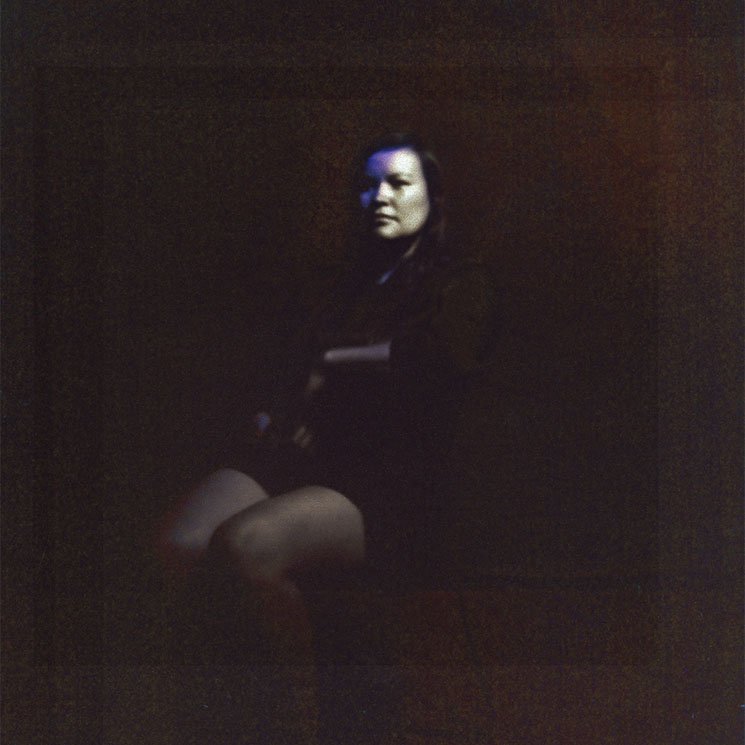
Has the artwork something to do with the theme of the album?
Joe: Yes, it’s done with a pinhole camera, which is an old way of photography using four minute exposure. So that girl had to sit there for four minutes without moving. That’s basically it. I mean, we were going to do a pinhole camera when we were still thinking of a title for the album. All these separate things and what the theme of the album was, it all just came together when we got the image back. It’s part that, part not fully explained.
Letting the listener do the work…
Joe: Yeah. We were definitely trying to tie in the art for every album, and I feel like this one really succeeded. The idea for both [Images du Futur and Hold/Still] was to have something analogue mixed with something digital. Images, I shot that on a digital camera and a visual artist named Scott Hazard does those layered photographs with rips, so it’s a very hands-on approach. And this photo was a very hands-on approach [too]. There is very little digital manipulation, but it’s there. It’s mixing together, kind of like what the band does, too. So that’s very inherent. I feel like it works well with all our albums.
Max: I would say: You’ve got most of your shopping done, late afternoon on a nice farmer’s market. And then you’re cooking most of the night and you have people over for dinner. You’re eating at ten, and then you just have some nice wines.
Air lässt grüßen auf der ersten Single des Ex Cops Gründers Brian Harding
Was genau an der Alternative Pop Band Ex Cops alternativ sein soll, ist nicht so wirklich klar. Das erste Album True Hallucinations gab sich – der Titel spricht Bände – noch etwas verträumter; Daggers hingegen ist für die großen Arenen gedacht und klingt dementsprechend gefühlskalt. Das neue Projekt von Brian Harding, der neben der Black Metal- und Popsängerin Amalie Bruun Ex Cops ausmacht, orientiert sich hingegen mehr am Soft Rock Electronica von Air und den ruhigeren Momenten in Phoenix‘ Diskografie.
„Shasta“ ist der erste Song von Blond Ambition und hatte vor ein paar Tagen Premiere. Harding stolziert darauf leicht funky durch die 70er Jahre und zelebriert „exciting times“ zuerst mit akustischer und später mit elektrischer Gitarre. Dort, wo er sich befindet, ist mit Sicherheit gutes Wetter, so gut gelaunt ist „Shasta“. Ein Album ist ebenfalls in der Mache, wir können uns also auf mehr blonde Ambition freuen.